

Boiler Feed Pump Calculation
Size a boiler feed pump by calculating flow rate and Total Dynamic Head (TDH), then estimate motor power. This is a simplified engineering estimate—always confirm with your boiler OEM, pump curves, and plant design standards.
Choose flow method
Flow can be estimated using (1) boiler horsepower (BHP) or (2) steam load + blowdown with a safety factor K.
Total Dynamic Head (TDH) inputs
Motor power inputs (kW)
Results
Required flow rate, TDH, and motor power estimate. Use pump curves for final selection.
Pressure head (H1)
—
Friction + static + margin
—
Estimated motor power
—
Flow conversions
—
| Reference | Typical value | Notes |
|---|---|---|
| K safety factor | 1.10–1.25 | Extra capacity for catch-up/variation |
| 1 bar | ≈ 10 m head | Water column (approx.) |
| 1 psi | ≈ 0.703 m head | For water at SG=1 |
| Power formula | P(kW)=Q·H·ρ·g / (3600·η) | Q in m³/h, H in m |
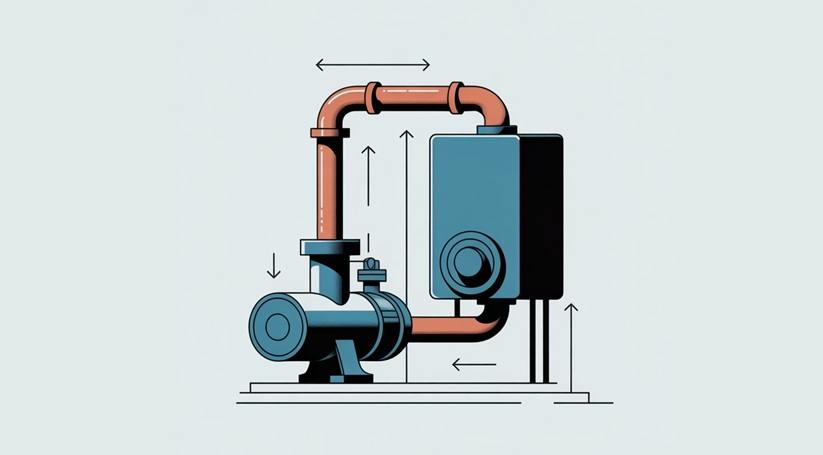
What is a Boiler Feed Pump Calculator?
A boiler feed pump calculator is a specialized computational tool designed to determine the precise pump specifications required to supply water to a boiler at the correct pressure and flow rate. Think of it as your digital assistant that crunches complex engineering numbers to ensure your boiler receives exactly what it needs to operate safely and efficiently.
Why You Need a Boiler Feed Pump Calculation
The consequences of incorrect pump sizing are serious:
- Under-sized pumps lead to insufficient water supply, causing boiler damage or dangerous dry-firing conditions
- Over-sized pumps waste energy, increase initial costs, and create excessive wear on system components
- Improper pressure calculations can result in cavitation, reducing pump lifespan by up to 70%
According to the U.S. Department of Energy, properly sized boiler feed pumps can improve overall system efficiency by 15-25%, translating to significant cost savings for American facilities.
Understanding Boiler Feed Pump Fundamentals
What Does a Boiler Feed Pump Do?
A boiler feed pump serves one primary function: delivering water into the boiler at a pressure higher than the boiler’s operating pressure. This seemingly simple task requires careful engineering because the pump must overcome:
- Boiler operating pressure – The internal pressure inside the boiler drum
- Static head – The vertical distance water must travel
- Friction losses – Resistance through piping, valves, and fittings
- Safety margin – Additional pressure to ensure reliable operation
Types of Boiler Feed Pumps
Centrifugal Pumps: Most common in industrial applications, suitable for high-flow, moderate-pressure scenarios (up to 3,000 PSI).
Positive Displacement Pumps: Ideal for smaller systems or applications requiring precise flow control regardless of pressure fluctuations.
Multi-stage Pumps: Used when extremely high pressures are required, common in power generation facilities.
Boiler Feed Pump Calculation Formula
Essential Parameters You Need
Before using any calculator, gather these critical measurements:
- Boiler steam generation rate (lbs/hr or kg/hr)
- Boiler operating pressure (PSI or bar)
- Feedwater temperature (°F or °C)
- Static head (vertical distance in feet or meters)
- Pipe length and diameter
- Number and type of fittings
The Core boiler feed pump Calculation Formula
The fundamental formula for boiler feed pump sizing involves two key calculations:
1. Flow Rate Calculation:
textFlow Rate (GPM) = (Boiler HP × 34.5) / Feedwater Density Factor
Or for steam generation:
textFlow Rate (GPM) = (Steam Production in lbs/hr) / (500 × Specific Gravity)
2. Total Dynamic Head (TDH) Calculation:
textTDH = Discharge Pressure + Static Head + Friction Losses + Safety Margin
Where:
- Discharge Pressure = Boiler Operating Pressure (converted to feet of head)
- Static Head = Vertical distance from pump to boiler (in feet)
- Friction Losses = Pressure drop through piping system
- Safety Margin = Typically 10-25% additional capacity
Pressure Conversion
To convert PSI to feet of head:
textFeet of Head = PSI × 2.31 / Specific Gravity of Water
For water at standard conditions: 1 PSI = 2.31 feet of head
Step-by-Step Guide: How to Use a Boiler Feed Pump Calculator
Step 1: Determine Your Boiler’s Steam Production Rate
Start by identifying how much steam your boiler produces. This is typically found on the boiler nameplate and expressed in pounds per hour (lbs/hr) or boiler horsepower (BHP).
Conversion reference: 1 Boiler HP = 34.5 lbs of steam per hour
Example: A 100 BHP boiler produces 3,450 lbs/hr of steam.
Step 2: Calculate Required Flow Rate
Using our 100 BHP boiler example:
textFlow Rate = (100 BHP × 34.5) / 500
Flow Rate = 3,450 / 500
Flow Rate = 6.9 GPM
Pro Tip: Always add 10-20% to account for blowdown requirements and system losses. Our example would require approximately 8.3 GPM (6.9 × 1.20).
Step 3: Determine Boiler Operating Pressure
Check your boiler specifications. Let’s assume our example operates at 150 PSI.
Convert to feet of head:
textHead = 150 PSI × 2.31 = 346.5 feet
Step 4: Calculate Static Head
Measure the vertical distance from the pump centerline to the point where water enters the boiler.
Example: Pump is 15 feet below the boiler entry point = 15 feet static head.
Step 5: Estimate Friction Losses
Friction losses depend on:
- Pipe length and diameter
- Number of elbows, valves, and fittings
- Flow velocity
For preliminary calculations, estimate 5-15% of discharge pressure for friction losses.
Example: 346.5 feet × 0.10 = 34.65 feet for friction losses.
Step 6: Add Safety Margin
Include a 10-15% safety margin to ensure the pump can handle variations:
textSafety Margin = Total Head × 0.15
Step 7: Calculate Total Dynamic Head (TDH)
Adding all components together:
textTDH = 346.5 (discharge pressure) + 15 (static) + 34.65 (friction) + 59.47 (safety margin)
TDH = 455.62 feet
Step 8: Select Your Pump
Now you need a pump that can deliver:
- Flow Rate: 8.3 GPM (minimum)
- Total Head: 456 feet (minimum)
Consult manufacturer pump curves to find a model that meets these specifications at its optimal efficiency point.
Practical Example: Real-World Application
Scenario: Small Manufacturing Facility
Given Parameters:
- Boiler capacity: 50 BHP
- Operating pressure: 125 PSI
- Feedwater temperature: 180°F
- Pump location: 20 feet below boiler
- Estimated pipe run: 75 feet with 6 elbows, 3 valves
Solution:
Step 1 – Flow Rate:
textBase Flow = (50 × 34.5) / 500 = 3.45 GPM
With 20% margin = 4.14 GPM
Step 2 – Discharge Pressure Head:
text125 PSI × 2.31 = 288.75 feet
Step 3 – Static Head:
text20 feet (given)
Step 4 – Friction Losses:
Using industry friction charts for 1.5″ pipe at 4 GPM ≈ 12 feet
Step 5 – Safety Margin (15%):
text(288.75 + 20 + 12) × 0.15 = 48.11 feet
Step 6 – Total Dynamic Head:
textTDH = 288.75 + 20 + 12 + 48.11 = 368.86 feet
Pump Selection: Choose a pump rated for minimum 4.5 GPM at 370 feet TDH.
Common Mistakes to Avoid
1. Ignoring Temperature Effects
Feedwater temperature affects density and specific gravity. Hot water is less dense, requiring adjustment to calculations.
2. Underestimating Friction Losses
In complex piping systems, friction can account for 20-30% of total head. Use detailed friction charts for accuracy.
3. Neglecting Future Expansion
If you plan to increase boiler capacity, size your pump accordingly now to avoid costly replacements.
4. Overlooking NPSH Requirements
Net Positive Suction Head (NPSH) is critical to prevent cavitation. Always verify your pump’s NPSH requirement matches available NPSH in your system.
5. Using Wrong Specific Gravity
Specific gravity changes with temperature. At 212°F, water’s specific gravity is approximately 0.96, not 1.0.
Advanced Considerations
Variable Speed Drives (VFDs)
Modern installations often incorporate VFDs to match pump output with varying boiler demands. This can reduce energy consumption by 30-50% compared to constant-speed pumps with control valves.
Redundancy Planning
Critical applications should include backup pumps. A common configuration is 2×50% or 2×100% capacity, ensuring operation continues during maintenance or failures.
Energy Efficiency Optimization
Select pumps operating at 75-85% of their best efficiency point (BEP) for optimal performance and longevity.
Frequently Asked Questions (FAQ)
Understanding boiler feed pump calculations is essential for anyone involved in boiler system design, maintenance, or operation. While the formulas may seem complex initially, following this step-by-step approach ensures you’ll select the right pump for your application every time. Proper pump sizing protects your investment, ensures safety, maximizes efficiency, and reduces operational costs throughout the system’s lifespan. Whether you’re managing a small facility or a large industrial operation, taking time to correctly calculate your boiler feed pump requirements pays dividends for years to come.
You can explore Similar Calculator like this Free HVAC Duct Calculator.