

Chatham Rate Cap Calculator
USA · SOFR Market · USD · 2026
Loan & Cap Details
Chatham-Style · USA · USDUses Black’s caplet model (industry standard) · USA SOFR market · For illustration & planning purposes
Ready to calculate your USA rate cap?
Fill in the loan details above and click Calculate. Premium, payoff diagram, chart, and period breakdown will appear here.
Desktop & mobile optimized · Black model · Light theme
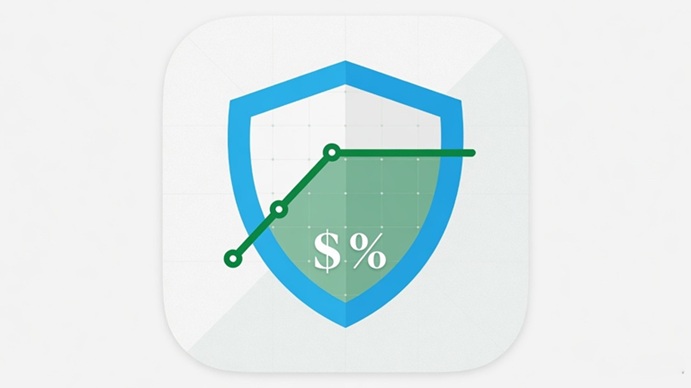
Chatham Rate Cap Calculator 2026: Beginner’s Guide to Hedging Rising SOFR Rates
Are you a U.S. business owner, real estate investor, or commercial borrower watching your monthly interest payments climb with every Fed move? With SOFR hovering around 3.65% in May 2026 and market expectations of potential volatility ahead, floating-rate loans can quickly turn from affordable to painful.
That’s exactly why thousands of American companies turn to the Chatham Rate Cap Calculator from Chatham Financial — one of the most trusted tools for estimating the upfront cost of an interest rate cap.
What Is a Chatham Rate Cap Calculator?
A Chatham Rate Cap Calculator is a free online tool developed by Chatham Financial (cf.com) that instantly estimates the premium cost of purchasing an interest rate cap on a floating-rate loan tied to Term SOFR or SOFR.
Think of an interest rate cap as insurance for your loan.
- You pay a one-time upfront premium (like an insurance deductible).
- In return, if SOFR rises above your chosen “strike rate,” the cap seller pays you the difference — every payment period — for the entire term.
- Your effective interest rate is capped, no matter how high rates go.
Chatham Financial is a global leader in interest rate risk management. They place over 6,000 caps per year for U.S. clients ranging from small businesses to Fortune 500 companies and major real estate funds. Their calculator is designed specifically for the U.S. market, using current SOFR forward curves, market volatility, and real dealer pricing data.
Unlike generic calculators, the Chatham tool gives indicative pricing you can actually take to banks or brokers. It’s perfect for beginners because it requires only three core inputs:
- Notional amount (loan size, e.g., $5M–$100M)
- Term (how many years you want protection, usually 1–10)
- Strike rate (the cap level, e.g., 4.00%)
Advanced users can tweak payment frequency and view scenario grids.
Why U.S. Borrowers Need Interest Rate Caps in 2026
The U.S. commercial real estate and corporate loan markets are dominated by floating-rate debt. Most CMBS, construction loans, and working-capital lines are priced at SOFR + spread (typically 200–350 basis points).
When SOFR was near zero in 2021–2022, payments felt cheap. But after the aggressive rate-hike cycle, many borrowers saw interest expense double or triple. Even with SOFR now stabilized around 3.65%, forward curves show uncertainty.
Benefits of using a Chatham Rate Cap Calculator:
- Predictable budgeting — Never pay more than your strike + spread again.
- No ongoing payments — Just one upfront premium.
- Flexibility — Caps don’t require hedge accounting like swaps in many cases.
- Downside protection only — You still benefit if rates fall.
- Lender-friendly — Many banks require or strongly prefer caps on floating-rate deals.
Caps are especially popular with:
- Multifamily and office property owners
- Hotel and retail operators
- Middle-market companies with variable-rate revolvers
- Any buyer closing a deal in an uncertain rate environment
How an Interest Rate Cap Actually Works (Simple Explanation)
An interest rate cap is not a loan modification. It’s a separate derivative contract.
Example payout formula (per period):
Cap Payout = MAX(0, SOFR – Strike Rate) × Notional Amount × (Days in Period / 360)
- If SOFR = 5.00% and your strike = 4.00% on a $10 million loan for a 90-day quarter → You receive $25,000 from the cap seller.
- If SOFR stays at 3.50% → You receive $0, but you still keep any savings from lower rates.
The cap is a series of caplets (one for each reset date). Chatham’s calculator prices the entire package using market data.
The Formula Behind the Chatham Rate Cap Calculator
Chatham uses a modified version of the Black ’76 model (also called Black model) to price each caplet.
Simplified Black formula for one caplet:
Caplet Value = Notional × τ × Discount Factor × [F × N(d₁) – K × N(d₂)]
Where:
- F = forward SOFR rate for that period
- K = your strike rate
- τ = time fraction of the period (e.g., 0.25 for quarterly)
- σ = implied volatility (market expectation of rate swings)
- N(d₁) and N(d₂) = cumulative normal distribution probabilities
- d₁ = [ln(F/K) + (σ²/2) × T] / (σ × √T)
- d₂ = d₁ – σ × √T
- T = time to reset date
Don’t worry — you don’t need to calculate this by hand! The Chatham Rate Cap Calculator does all the heavy math instantly using live market data.
Key drivers of premium cost:
- How far “in-the-money” your strike is (lower strike = more expensive)
- Term length (longer = higher premium)
- Volatility (higher expected rate swings = higher cost)
- Forward curve (if markets expect rates to rise, caps cost more)
How to Use the Chatham Rate Cap Calculator
Here’s exactly how to get accurate results in under 60 seconds:
- Enter Notional Amount — Your loan principal (e.g., $15,000,000).
- Choose Term — How many years of protection you need (common: 2–5 years).
- Set Strike Rate — The level you want protection above (try 4.00%, 4.50%, 5.00% to compare).
- Select Index — Usually Term SOFR (most common for U.S. loans).
- Review Indicative Price — The tool instantly shows the upfront premium in dollars and basis points.
- Test Scenarios — Change the strike or term and watch the cost update live.
- Download or Share — Export the pricing grid for your lender or broker.
Pro tip: Always compare 2–3 different strikes. A 50bps higher strike can cut premium cost by 30–50% while still giving strong protection.
Real-World U.S. Example: $10 Million Loan in 2026
Let’s run a realistic scenario for a Dallas-based commercial real estate investor:
- Loan: $10,000,000 floating-rate construction loan
- Index: Term SOFR + 2.50% spread
- Current SOFR: 3.65% → All-in rate today = 6.15%
- Term: 3 years
- Strike tested: 4.50% SOFR (effective cap = 7.00%)
Chatham Calculator Results (approximate May 2026 pricing):
- Upfront premium ≈ $285,000 (2.85% of notional, or ~95 bps per year)
- If SOFR averages 4.0% → Cap pays nothing (you save vs. higher strikes)
- If SOFR spikes to 6.0% for full term → Cap pays ~$450,000+ total → Net cost after premium is still far below uncapped scenario
Bottom line: For $285k today, you lock in a maximum all-in rate of 7.00% for three years — giving total peace of mind while still benefiting if rates drop.
Advanced Tips for U.S. Users
- Compare Cap vs. Swap: A swap fixes your rate completely but removes upside if rates fall. Caps are cheaper and keep downside benefit.
- Hedge Accounting: Many U.S. companies qualify for simplified hedge accounting under ASC 815.
- Broker vs. Direct: Chatham can execute the cap for you at competitive dealer pricing.
- Stress Test: Always run the “aggressive” volatility scenario in the calculator.
- Combine with Floor or Collar for zero-cost strategies (popular in tight credit markets).
Frequently Asked Questions (FAQ)
The Chatham Rate Cap Calculator removes the guesswork from one of the biggest financial risks facing American businesses in 2026. In just minutes you can see exactly what protection costs and decide whether it fits your budget.
Don’t let another rate spike catch you off guard. Run your numbers today, protect your cash flow tomorrow, and sleep better knowing your maximum interest cost is locked in.
You can explore Similar Calculator like this HOA Fee Calculator per month.